






Wilson's Meconopsis Expedition
A Floral Journey to Sichuan, China
Wilson's Meconopsis Expedition
A Floral Journey to Sichuan, China




Contact us

Back to top





Submit to agree to our
Privacy Policy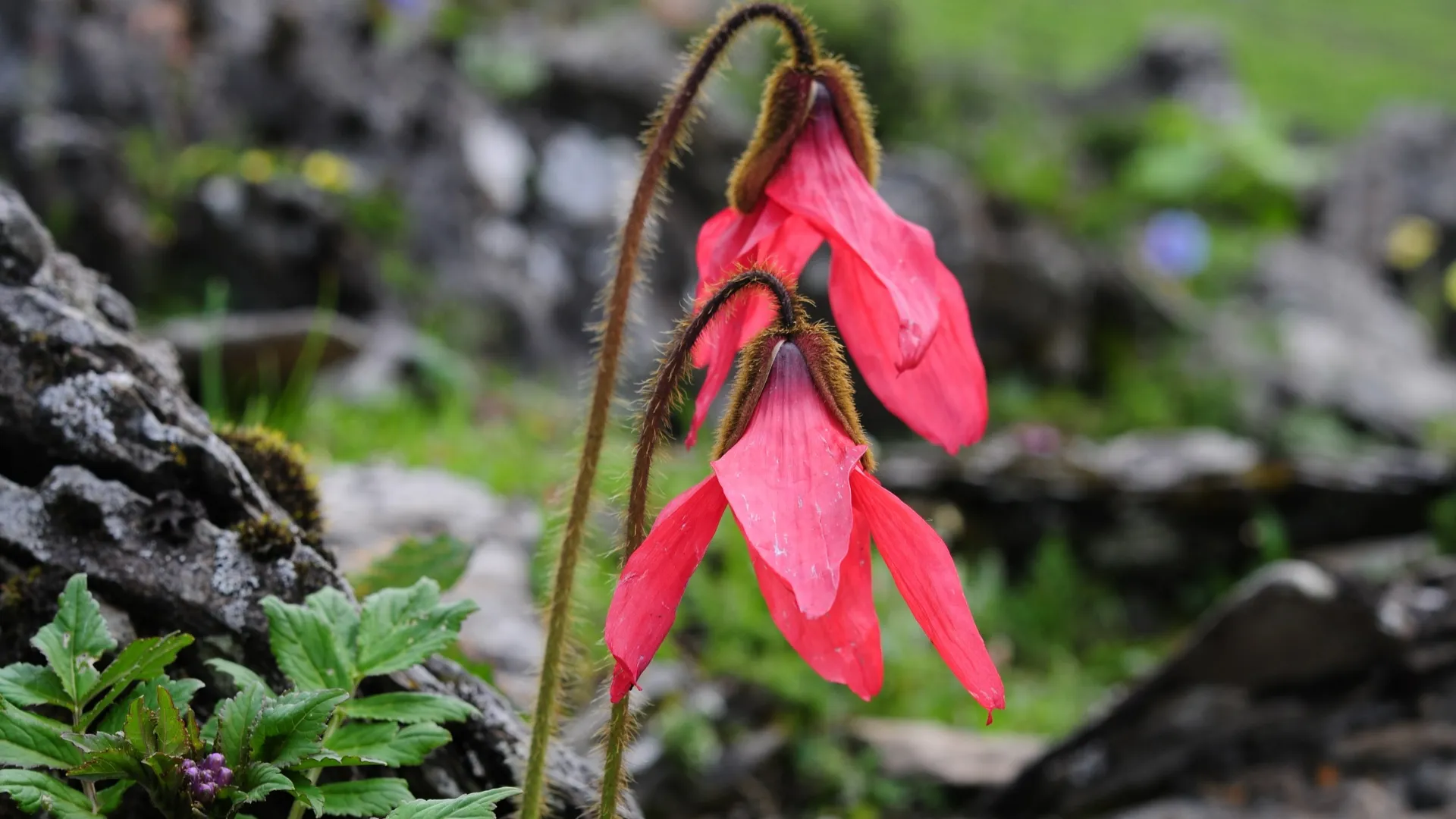
Wilson's Meconopsis Expedition
A Floral Journey to Sichuan, China

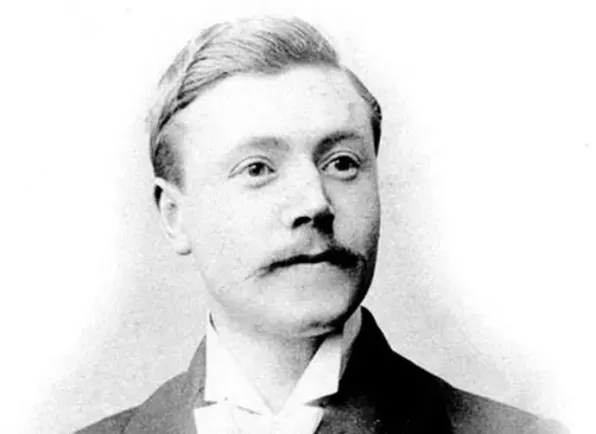
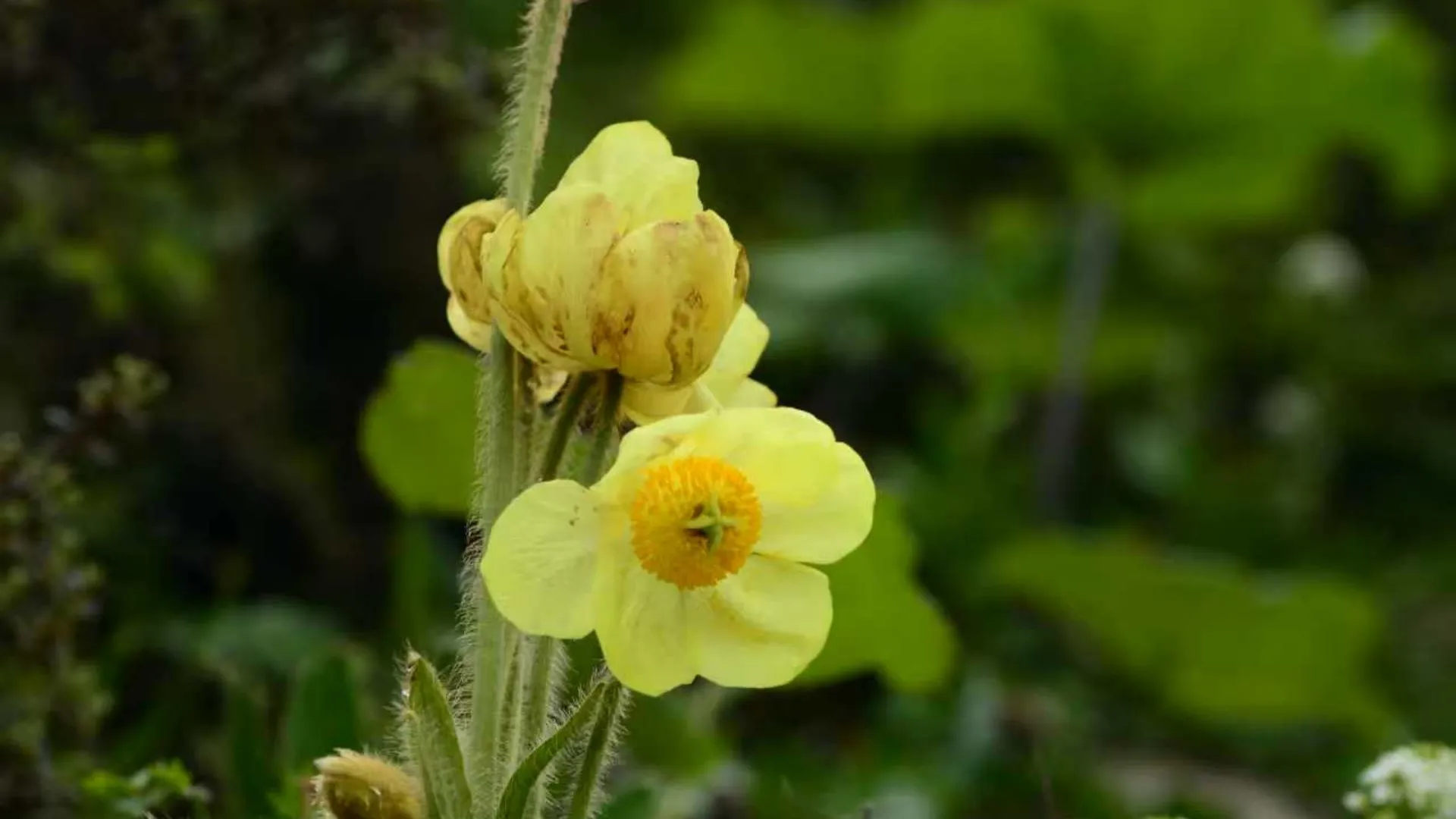
A century ago, British botanist Ernest Henry Wilson journeyed across the ocean to China, initiating a scientific expedition into the Hengduan Mountains of western China. He ventured deep into the mountains of northern and western Sichuan, reaching as far as Kangding and Songpan, where he witnessed vast expanses of golden Meconopsis integrifolia. In Songpan, he collected Meconopsis punicea and traveled to the Minjiang Valley, introducing Lilium regale E.H.Wilson to Europe, where it helped rescue European lilies from decline. A hundred years later, we will follow in the footsteps of botanist Ernest Henry Wilson, revisiting the plant kingdom of the Hengduan Mountains in search of the Meconopsis, often hailed as the "Goddess of the Highlands," retracing his pioneering route.
Objective
Meconopsis balangensis var. atrata,Meconopsis integrifolia、Meconopsis henrici、Meconopsis purpurea、Meconopsis punicea、Meconopsis quintuplinervia、Meconopsis horridula、Primula fangii、Primula szechuanica、Primula sikkimensis、Primula involucrata subsp.yargongensis、Primula stenocalyx、Primula sikkimensis、Primula amethystina、Oyama wilsonii、Fritillaria unibracteata、Cassiope selaginoides、Enkianthus deflexus,Cypripedium flavum 、Cypripedium franchetii、Cypripedium calcicola .、Cypripedium tibeticum 、Cypripedium ludlowii 、Cypripedium guttatum Cypripedium bardolphianum 、Cypripedium farreri 、Ponerorchis monantha、Calanthe delavayi、Oreorchis nana、Oreorchis oligantha、Corallorhiza trifida、Tipularia szechuanica、Neottia acuminata、Neottia wardii、Galearis roborowskyi、Galearis spathulata、Platanthera minutiflora、Dactylorhiza viridis、Primula alsophila、Androsace tapete、Androsace yargongensis、Sibbaldia purpurea、Gentiana crassuloides、Sibiraea laevigata、Aquilegia ecalcarata、Paeonia veitchii Lynch、Adonis coerulea、Lady‘s Mantle、Anemone rivularis、Anthriscus sylvestris、Aquilegia rockii、Aster flaccidus、Calanthe delavayi、Caltha Palustris、Cardamine macrophylla、Chrysosplenium pilosus Maxim.、Corydalis hebephylla、Corydalis pachycentra、Corydalis quantmeyeriana Fedde、Cypripedium bardolphianum、Cypripedium calcicola 、Cypripedium flavum、Cypripedium tibeticum、、Daphne tangutica Maxim、Fritillaria unibracteata、Iris goniocarpa Baker、Microula pseudotrichocarpa、Ponerorchis chusua、Oreorchis nana、Pedicularis szetschuanica 、Pedicularis macrosiphon、 Pyrola calliantha Campylotropis wilsonii、Picea wilsonii、Berberis wilsonii......
Itinerary

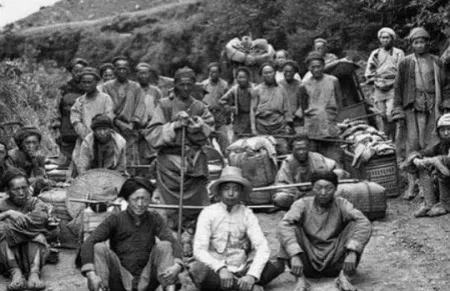
We assemble in Chengdu, a city of remarkable diversity with a history spanning 4,500 years. Sichuan Opera, Chinese martial arts, and tea culture have been passed down through millennia. Today, Chengdu is not only the economic hub of western China but also a gateway connecting southwestern China to the world, as well as a globally renowned tourist destination. Chengdu is also the homeland of the giant panda and hosts a major research and conservation base. Sichuan cuisine captivates taste buds worldwide.
Under the guidance of our tour leader, we will explore this vibrant city—visiting People’s Park for kung fu tea, a relaxing ear-cleaning service, and a leisurely game of mahjong.
At a traditional Sichuan-style teahouse, we will watch the magical art of Sichuan face-changing, a fleeting and mesmerizing “sorcery” that is a hallmark of Sichuan Opera. Dinner will feature authentic Sichuan cuisine, with bold, numbing spices that will conquer your palate. A pre-trip briefing, In the Footsteps of Plant Hunters, will also be held.
We begin our Meconopsis expedition. Passing through Ya’an—the starting point of the ancient Silk Road, where caravans once carried silk, tea, and ceramics to Tibet, South Asia, and Southeast Asia, returning with rare spices, medicinal herbs, and jewels—we witness the rich cultural diversity forged over centuries.
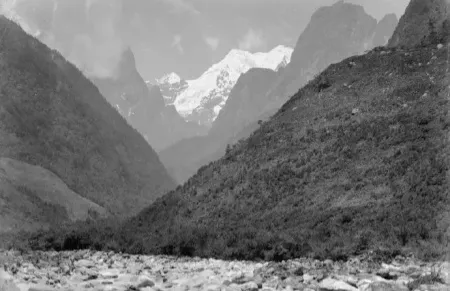
At Yajiageng, the river valleys are strewn with red-lichen-covered stones, and alpine plants flourish. A profusion of high-altitude blooms greets us: Meconopsis, Anemone, Primula, Pedicularis, Delphinium, Iris, Gentian… with the chance to encounter Magnolia dawsoniana Rehd. & Wils.
Yajiageng was a crucial site in Wilson’s botanical research. In 1903, he discovered Meconopsis integrifolia here, a species emblematic of the desolate plateau region of the Qinghai-Tibet Plateau. We then proceed to Kangding, the gateway to Tibet—a mixed Tibetan-Han town and a key node on the ancient Tea-Horse Road. Known as the "Home of Love Songs" in China, Kangding is a place where diverse religious beliefs and lifestyles coexist.
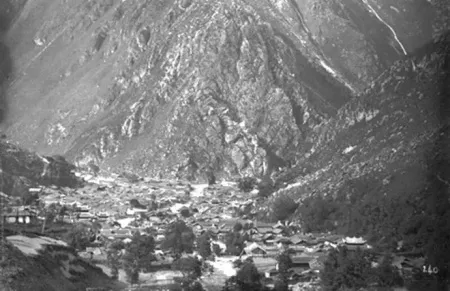
Danba is known as the "Land of a Thousand Watchtowers." Here, Tibetan houses and defensive towers combine to create a unique architectural style, with centuries of history—a living architectural museum.
The local Jiarong Tibetan people are an ancient and distinctive ethnic group. They hand-weave woolen blankets, perform the unique Guozhuang dance, and serve traditional butter tea. We will spend a peaceful, pastoral time in a Tibetan home.
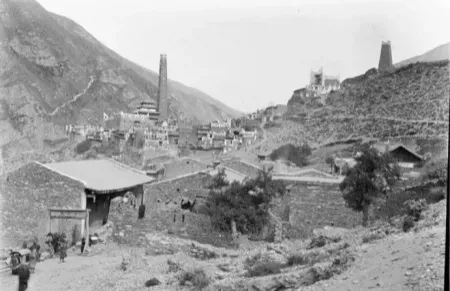
Passing through the Dawayi Tusi Official Village mentioned by Wilson, we arrive at Xiaojin County—a key destination of our journey. Its habitats include river valley forests, alpine meadows, and snowy scree slopes, where Meconopsis, Corydalis edulis, Primula, Pedicularis, Iris, and Gentian bloom in profusion. Wilson explored here over a century ago, and today it remains a pilgrimage site for plant enthusiasts. We will search for Meconopsis balangensis var. atrata, Meconopsis integrifolia, Meconopsis henrici, Meconopsis purpurea, Meconopsis punicea, as well as Primula fangii, Primula szechuanica, Primula sikkimensis, Primula involucrata subsp. yargongensis, Primula stenocalyx, Primula amethystina, and other primulas, plus Oyama wilsonii, Fritillaria unibracteata, Cassiope selaginoides, Enkianthus deflexus, and Iris goniocarpa Baker.
This is also peak blooming season for Cypripedium (lady’s slipper orchids), so we will see many orchids, including Cypripedium flavum, Cypripedium tibeticum, Cypripedium plecrochilum, Cypripedium debile, Cypripedium franchetii, Cypripedium palangshanense, Cypripedium shanxiense, Calanthe tricarinata, Neottia acuminata, Neottia wardii, Ponerorchis chusua, and Liparis japonica.
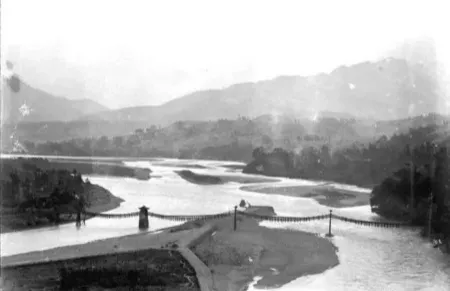
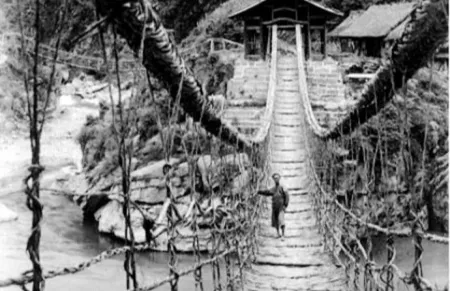
After concluding our exploration in Xiaojin, we head to Dujiangyan, world-famous for its water conservancy system. Our Best leader will guide you through this magnificent project. You will witness its marvel firsthand. Wilson praised the Dujiangyan irrigation system as a "perfect and brilliant irrigation system," and he documented the Anlan Suspension Bridge in his field notes. Dujiangyan is a UNESCO World Natural and Cultural Heritage site, utilizing natural resources without destroying them—it remains the world’s only surviving "ecological engineering" masterpiece and is still considered the finest example of water engineering globally.
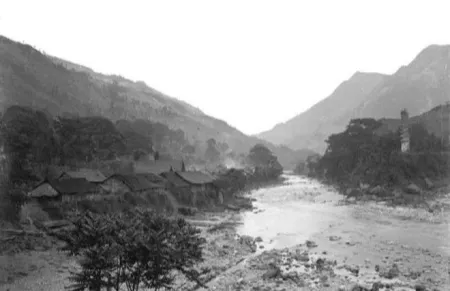
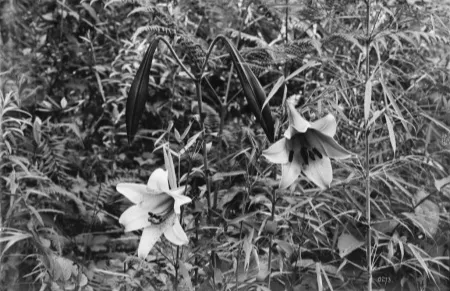
Following the Minjiang River Valley to Songpan, Lilium regale E.H. Wilson blooms in succession along the slopes. This lily, which grows in dry, steep gorges, is known in Western gardens as the "Regal Lily." Along the way, we pass the ancient town of Diexi—nearly destroyed by an earthquake that erased old Qiang villages and ancient walls, but remnants remain faintly visible.
Songpan is a well-preserved ancient city, still retaining its century-old appearance. We can even match Wilson’s century-old photographs and descriptions to the actual locations he documented.
Located on the eastern edge of the Qinghai-Tibet Plateau, Songpan is not only home to rare plants like Lilium regale E.H. Wilson—making it an ideal site for botanical research and collection—but also a key node on the Tea-Horse Road. Here, we will seek out rare flowers such as Cypripedium flavum and Cypripedium tibeticum.
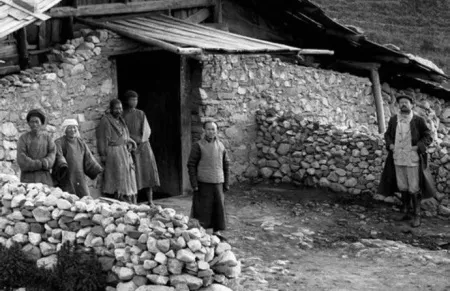
Xueshanliangzi Pass sits at over 4,000 meters elevation. Traversing vast alpine meadows and wetlands, we will see many high-altitude flowers endemic to western Sichuan, surrounded by the floral spectacle of Meconopsis punicea and Meconopsis quintuplinervia.
Wilson wrote: "Huanglong is truly a magical place, almost beyond belief." Meconopsis punicea is a Chinese endemic, distinct from other Meconopsis, found only in the rhododendron forests of the Hengduan Mountains.
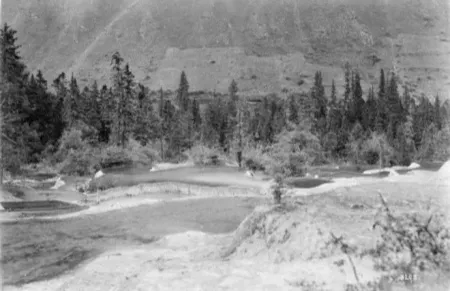
Wilson visited Huanglong three times. Today, it is a famous scenic area. Huanglong hosts a vast population of orchids, including rare Cypripedium and Calanthe species. Also in bloom: Adonis coerulea, Lady’s Mantle, Anemone rivularis, Anthriscus sylvestris, Aquilegia rockii, Aster flaccidus, Calanthe delavayi, Caltha palustris, Cardamine macrophylla, Chrysosplenium pilosum Maxim., Corydalis hebephylla, Corydalis pachycentra, Corydalis quantmeyeriana Fedde, Cypripedium bardolphianum, Cypripedium calcicola, Cypripedium flavum, Cypripedium tibeticum, Daphne tangutica Maxim., Fritillaria unibracteata, Iris goniocarpa Baker, Meconopsis integrifolia, Meconopsis punicea, Meconopsis quintuplinervia, Microula pseudotrichocarpa, Ponerorchis chusua, Oreorchis nana, Pedicularis szetschuanica, Pedicularis macrosiphon, Pyrola calliantha, and several plants named after Wilson, such as Campylotropis wilsonii, Picea wilsonii, and Berberis wilsonii.
Approximately 2,000 colorful travertine pools cascade like terraces across the landscape. At 4,500 meters, alpine meadows host unique high-plateau plants: Meconopsis integrifolia, Meconopsis punicea, Meconopsis quintuplinervia, Meconopsis horridula, various Primula, Pedicularis, Asteraceae, orchids, and Liliaceae—all in full bloom.
Pingwu County lies in the core of the Sichuan-Yunnan Biodiversity Hotspot and serves as a transitional corridor for giant pandas between the Minshan and Qinling mountain ranges. Our destination here is one of the most pristine and intact remaining forests. Wanglang National Nature Reserve is one of China’s earliest nature reserves established primarily to protect giant pandas and other rare wildlife and their habitats.
We will spend a full day exploring Wanglang’s orchid sanctuary. Wanglang is richest in Cypripedium, offering a true orchid feast: Cypripedium flavum, Cypripedium franchetii, Cypripedium calcicola, Cypripedium tibeticum, Cypripedium ludlowii, Cypripedium guttatum, Cypripedium bardolphianum, Cypripedium farreri—all blooming together. Additionally, we may see Ponerorchis monantha, Calanthe delavayi, Oreorchis nana, Oreorchis oligantha, Corallorhiza trifida, Tipularia szechuanica, Neottia acuminata, Neottia wardii, Galearis roborowskyi, Galearis spathulata, Platanthera minutiflora, Dactylorhiza viridis, Primula alsophila, Primula involucrata subsp. yargongensis, Androsace tapete, Androsace yargongensis, Sibbaldia purpurea, Gentiana crassuloides, Sibiraea laevigata, Aquilegia ecalcarata, and Paeonia veitchii Lynch.
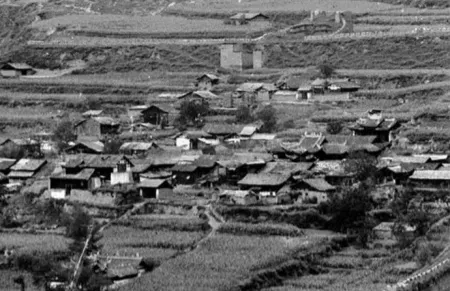
We will visit a Baima Tibetan village. They belong to an ancient branch of the Tibetan people but maintain distinct customs. Baima Tibetans wear masks and felt hats and perform the panda dance. For centuries, they have protected giant pandas.
In Pingwu County stands a 300-year-old giant Kenanshu XN tree, located along the Tea-Horse Road. Wilson photographed it and introduced its seeds to the West. We will venture into Pingwu’s high mountains and gorges to visit this "Fengshui tree," passing through a small village once called "Sansheyi” where Wilson once stayed overnight.
Then we drive back to Chengdu.
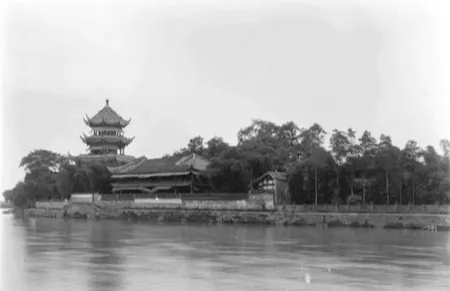
Wilson visited Chengdu many times and documented the city with his camera. Today, we will visit Wangjiang Tower, Wuhou Shrine, Qingyang Palace, as well as People’s Park and the Man Cheng (now Kuanzhai Alley)—all sites captured in Wilson’s photographs. A century later, the Chengdu Wilson saw has become a vibrant city where cultural heritage and modern civilization intertwine, still beloved by travelers worldwide.
After concluding our Sichuan journey, your Best leader will escort you to the airport.
Start customizing your exclusive !
Resources Recommend


We will take you on an in-depth adventure through the Giant Panda National Park, where you will learn about the wild lives of giant pandas and Sichuan snub-nosed monkeys in their natural habitats, and discover wildlife unique to China. You will also have the opportunity to get involved in giant panda conservation efforts by becoming a giant panda volunteer.Here, you can not only appreciate the beautiful and rich natural environment of China but also deeply experience Chinese culture
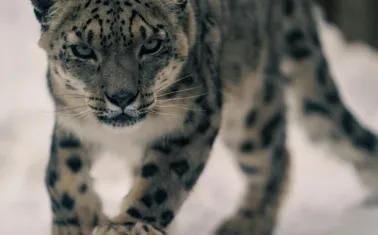
The Sanjiangyuan National Park on the Qinghai-Tibet Plateau, with an average altitude of around 4,600 metres, is a veritable paradise for wildlife. We shall witness the mass migration of Chiru, track snow leopards as they roam the snow-capped mountains, and seek out wild yaks, kiangs, white-lipped deer, blue sheep, Tibetan foxes, black-necked cranes, bar-headed geese and Himalayan vultures – wildlife rarely seen elsewhere.
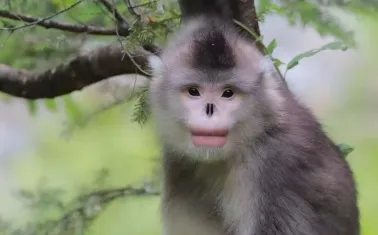
The Shangri-La region is not only a rich species gene bank but also one of the best-preserved biodiversity hotspots in China. Numerous rare and unique species thrive here, including the Yunnan Snub-nosed Monkey, Stryker's Snub-nosed Monkey, Skywalker Hoolock Gibbon, Sclater's Monal, Slender-billed Scimitar Babbler, and Fire-tailed Myzornis. Moreover, this is also one of the most culturally diverse regions in China.
The Shangri-La region is a uniquely distinctive geographical area, home to hundreds of snow-capped peaks, deeply incised gorges, vast alpine pastures, scattered mountain lakes and vast primeval forests... It serves as a microcosm of the Northern Hemisphere’s biodiversity and ecological environment, and is truly a mecca for flower enthusiasts from around the world. It is also a place of great cultural charm, offering visitors the opportunity to experience China’s diverse ethnic cultures.


+86-28-62058618

info@bestecotours.com

No. 889, Section 1, Riyue Avenue,
Qingyang District, Chengdu City,
Sichuan Province

Copyright © 2026 •BESTECOTOURS
| Open Positions | Privacy Policy | Terms and Conditions | Manage Cookies