







Sichuan, China:
Where High-Altitude Pheasants Converge
Sichuan, China:
Where High-Altitude Pheasants Converge




Contact us

Back to top





Submit to agree to our
Privacy Policy
Sichuan, China:
Where High-Altitude Pheasants Converge

Sichuan Province is arguably the most concentrated region for pheasant diversity in all of China—with Ganzi Tibetan Autonomous Prefecture standing out as the crown jewel. The cloudy, humid, and enclosed environment here has given rise to vast forests. Both plants and animals occupy a transitional zone, and the relative isolation left by the last glacial period has spawned a remarkable number of endemic species. This is one of the most ecologically intact regions in the world, with the richest vertical gradients of climate zones and distributions of plant and animal life. It is also one of the most species-rich temperate regions on Earth.
In this pheasant kingdom of Sichuan, we venture deep into bird-rich areas, observing and filming between elevations of 1,000 and 4,400 meters. Here, a spectacular assembly of pheasants gathers golden pheasant, Lady Amherst's pheasant, Chinese bamboo partridge, koklass pheasant, Temminck's tragopan, blood pheasant, Sichuan pheasant partridge, white-eared pheasant, Chinese monal, Chinese grouse, Tibetan partridge, Tibetan snowcock, and Sichuan partridge. It is nothing short of a pheasant festival. Their calls echo through the mountains, rising and falling, together playing a symphony of pheasants.
Chinese Monal: The Divine Bird of the Snow Mountains
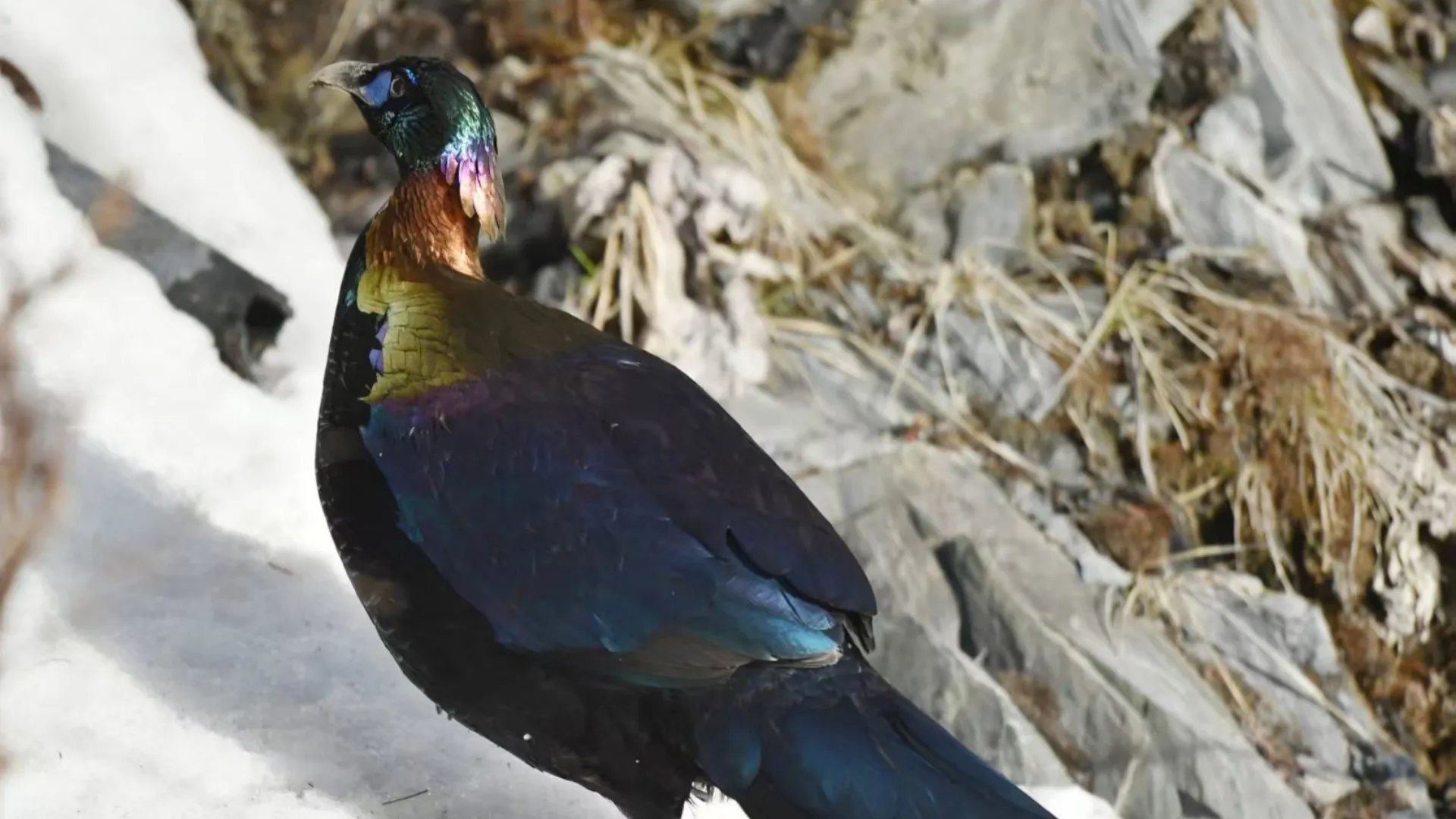
On fog-shrouded Balang Mountain in Sichuan, the Chinese monal sings out. It walks across the snow, its peacock-like form still clearly visible. The male's feathers shimmer with more than ten distinct colors, gleaming with a metallic sheen—the orange red of its neck especially dazzling, as if a mythical bird has descended to the human world.
The Chinese monal is endemic to China. It inhabits the alpine meadows, scrub, and rocky terrain above the tree line between 3,000 and 5,000 meters—a realm perpetually wrapped in mist and cloud. Locals call it the "nine-colored bird." It is fond of eating fritillary bulbs, a precious alpine medicinal herb. In winter, when snow cover makes it difficult to find grit for digestion, the monal swallows burnt charcoal from old campfires—earning it another local name: the "charcoal bird."
Each spring, the male Chinese monal performs a remarkable courtship flight—a true "aerial display." It launches from a steep cliff in a swooping, gliding dive, tail feathers fanned out, circling and hovering before diving again, all accompanied by sharp calls. It then soars high above the cliffs and forests. Using updrafts to gain lift, it spirals upward from lower elevations to great heights—a behavior rarely seen in other pheasants.
The Chinese monal is not only strikingly beautiful but also gifted with a melodious voice. Its call begins with two short "gou, gou" notes and ends with a drawn-out "au...wu," resembling the high notes of a flute or clarinet—varied, rich, and continuous. From early March through late June, every morning and evening, the male perches on a rocky outcrop near the mountain summit, his voice carrying two to three kilometers across the valleys.
Currently, the wild population of Chinese monal is estimated at fewer than 3,000 individuals. In recent years, thanks to improved management and public education within nature reserves, local villagers have become more aware of the need for protection. The species' situation has improved somewhat, and we can still witness this magnificent bird in parts of Sichuan.
Koklass Pheasant: A Voice Without a Face
On Balang Mountain in late spring and early summer, just as the sky begins to lighten, the koklass pheasants are the first to wake. Their overlapping songs mark the start of a new day for birdwatchers. Unlike other high-altitude pheasants that prefer to gather in flocks, the koklass likes to live alone or in pairs. Its call closely resembles the "gaga" of a duck—so much so that locals call it the "mountain duck" or the "half-Jin gaga." A tuft of feathers on its head resembles a spoon—hence its Chinese name, "spoon chicken."
The koklass pheasant is exceptionally wary. It uses the dim light of dawn as cover, moving quickly through the mountain slopes. Once it reaches its feeding ground, it becomes utterly silent. Only at dusk, maybe, will it call out a few times to summon its companions. Then it retreats into the rhododendron forest, roosting in trees at night. After that, it becomes very difficult to find.
White-Eared Pheasant
The white-eared pheasant is the largest of all pheasants. Its range covers mixed coniferous-broadleaf forests, subalpine coniferous forests, alpine scrub, and alpine meadows—almost identical to that of the Chinese monal, except that the white-eared pheasant does not venture up to the higher scree slopes. In spring, the white-eared pheasant habitually perches on tree branches at dawn and dusk. The monal and the white-eared pheasant often feed close to each other, acting as mutual sentinels.
Chestnut-throated Modal Partridge
China has two species of partridge in the genus Tetraophasis—the Chestnut-throated Modal Partridge and the Buff-throated Modal Partridge—both endemic to the country. Both can be found on Balang Mountain in Sichuan.
The Chestnut-throated Modal Partridge—called the "red-throated chicken" by locals—primarily inhabits high-altitude coniferous forests between 3,000 and 4,000 meters, as well as the rhododendron scrub above the tree line. It occasionally ventures up to the alpine scree slopes. Secretive and elusive, it is a rare sight. When startled, it quickly vanishes into dense rhododendron thickets. The best time to see it is early April, during the spring snow. No matter how fierce the wind or heavy snow, the Chestnut-throated Modal Partridge calls out when the snow clears after a storm, moving across snow-covered slopes and cliffs in search of a mate.
The Buff-throated Modal Partridge has a touch of humor about its small, round, and plump, wobbling from side to side as it runs. When a predator appears, it disappears without a trace, sometimes simply hiding in place among the rocks.
Sichuan Partridge: A Hidden Life
In central Sichuan, the Sichuan partridge lives a secretive life in evergreen broadleaf forests between 1,000 and 2,000 meters. This pheasant is endemic to China and one of the very few partridges in which males and females have different plumage. Its feathers are complex, mottled, and cryptic. Fewer than 3,000 individuals remain. Even forest rangers rarely catch a glimpse of it. Laojun Mountain in Sichuan is one of its key strongholds, and it is here that we can observe this elusive bird.
Temminck's Tragopan
There are five species of "horned" tragopans in the world. The Temminck's tragopan is wary, timid, and an excellent runner. It is usually seen alone or in pairs, spending most of its time on the forest floor. When threatened, it retreats to the trees. At night, it roosts in the branches. Each March, the breeding season begins. The calls of both males and females sound like the crying of a child—"wa, wa, wa."
The male then performs a spectacular display. Two fleshy, cobalt-blue "horns" hidden beneath their head feathers suddenly swell and stand erect. Meanwhile, a cobalt-blue bib-like wattle—also fleshy—fills with blood, expanding and spreading across its chest, dotted with blue spots. This beautiful wattle expands and contracts in rhythm with the male's courtship dance.
Lady Amherst's Pheasant
The golden pheasants and Lady Amherst's pheasants have long been favorites of zoos and pheasant enthusiasts across Europe and America. Whether they represent two distinct species or two subspecies of the same species has long been debated among scholars. In Sichuan, however, their ranges overlap.
The breeding season for Lady Amherst's pheasant runs from March to May. Dominant males establish territories, excluding other males. This territorial behavior allows the residents to effectively control food resources and ensure reproductive success. But territorial males—calling constantly—also expose themselves to hunters or predators. If a territorial male is killed, another strong male will take his place. Even then, dominance must be won through combat. Each April, fights between males can often be observed in the pheasant's habitat.
Winning a territory is not enough, however. To gain a female's favor, the male must also perform an elaborate courtship dance. He repeats his dance repeatedly, tirelessly, until the female stops retreating—a performance that can last ten, twenty, even thirty minutes.
Snow Partridge & Tibetan Snowcock: Sentinels of the Summit
The snow partridge and the Tibetan snowcock are the watchmen of the snowy peaks. On these remote, high mountain summits, they are neighbors—sharing the same habitat and competing for the same food. The snow partridge is highly social, often gathering in flocks of a dozen or so. It delights in flying from one summit to another, calling as it goes.
The Tibetan snowcock, like the snow partridge, inhabits alpine meadows and scree slopes—though at slightly lower elevations. Its plumage blends almost perfectly with the surrounding environment, making it extremely difficult to spot. Even so, because its meat is considered delicious, it has been heavily hunted in the past. Today, hunting bans within nature reserves and growing public awareness have given this species room to recover.
Blood Pheasant: The Hermit of the Rhododendron Forests
The blood pheasant is endemic to China and a rarely seen bird. The male's feathers are mostly grayish-blue, soft and elongated. The chest feathers are green and lance-shaped—like slender willow leaves. The tail feathers have broad, non-red edges. The female is overall duller and more subdued in color. But both sexes share one striking feature: bright orange-red legs.
Blood pheasants are gregarious, often moving in flocks of several to several dozen. They begin their activities at first light and continue until dusk. At midday, they like to rest on rocks or in the shade of trees. At night, they roost in the branches. When they spot a person, they simply hide in the rhododendron thickets—which makes filming them relatively straightforward.
Golden Pheasant
The male golden pheasant is resplendent. Red, orange, yellow, green, blue, indigo, and violet feathers interweave in a dazzling display that is impossible to forget. Locals call it the "golden chicken." Golden pheasants are social, with keen hearing and eyesight. They are excellent runners and can also glide skillfully through the forest, threading between trees like mythical birds of the woods.
Chinese Bamboo Partridge
The small and delicate Chinese bamboo partridge prefers to forage and rest in bamboo forests and thickets near farmland. Except during the breeding and chick-rearing seasons, when it calls frequently, it otherwise moves about in near-total silence.
Birds of Interest in the Mountainous Regions of South-West China
China can be regarded as a country rich in birds. There are approximately 10,000 species of birds worldwide, and in China, over 1,400 species have been recorded. With its vast territory and diverse landscapes, China has unique bird species that are unique to the world, making it a top bird-watching destination. It is also considered the distribution center and possible origin of birds such as pheasants, Parrotbills, and finches. China is also the most important stopover country for many migratory birds, where one can witness the most spectacular bird migration scenes in the world.
For birdwatchers, in China, there is the opportunity to continuously observe birds and even discover new species.We have the finest birdwatching guides and experts in China. On pheasant-watching tours, we draw on our wealth of experience to plan the most efficient itineraries for you, ensuring you have the best possible chance of spotting China’s rare bird species.
Start customizing your exclusive !

Sichuan not only has unique pheasants in China but is also the most concentrated area of the raven finch in the world, making it a paradise for observing pheasants and raven finches. It is also a gathering place for both ancient and young species, with birds and beasts running wild in the mountains and fields, interpreting the wild side of western Sichuan.
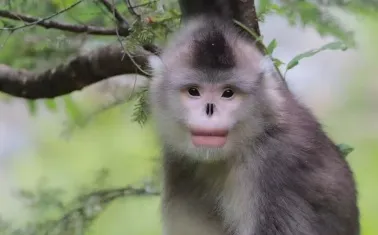
The Shangri-La region is not only a rich species gene bank but also one of the best-preserved biodiversity hotspots in China. Numerous rare and unique species thrive here, including the Yunnan Snub-nosed Monkey, Stryker's Snub-nosed Monkey, Skywalker Hoolock Gibbon, Sclater's Monal, Slender-billed Scimitar Babbler, and Fire-tailed Myzornis. Moreover, this is also one of the most culturally diverse regions in China.
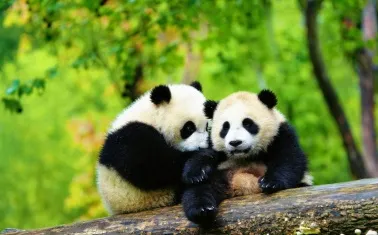
We will take you on an in-depth adventure through the Giant Panda National Park, where you will learn about the wild lives of giant pandas and Golden snub-nosed monkeys in their natural habitats, and discover wildlife unique to China. You will also have the opportunity to get involved in giant panda conservation efforts by becoming a giant panda volunteer.Here, you can not only appreciate the beautiful and rich natural environment of China but also deeply experience Chinese culture
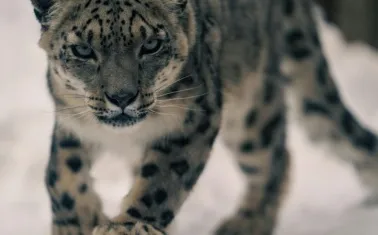
The Sanjiangyuan National Park on the Qinghai-Tibet Plateau, with an average altitude of around 4,600 metres, is a veritable paradise for wildlife. We shall witness the mass migration of Chiru, track snow leopards as they roam the snow-capped mountains, and seek out wild yaks, kiangs, white-lipped deer, blue sheep, Tibetan foxes, black-necked cranes, bar-headed geese and Himalayan vultures – wildlife rarely seen elsewhere.


+86-28-62058618

info@bestecotours.com

No. 889, Section 1, Riyue Avenue,
Qingyang District, Chengdu City,
Sichuan Province

Copyright © 2026 •BESTECOTOURS
| Open Positions | Privacy Policy | Terms and Conditions | Manage Cookies