




The social life of
the Yunnan snub-nosed Monkey
The social life of
the Yunnan snub-nosed Monkey




Contact us

Back to top



Submit to agree to our
Privacy Policy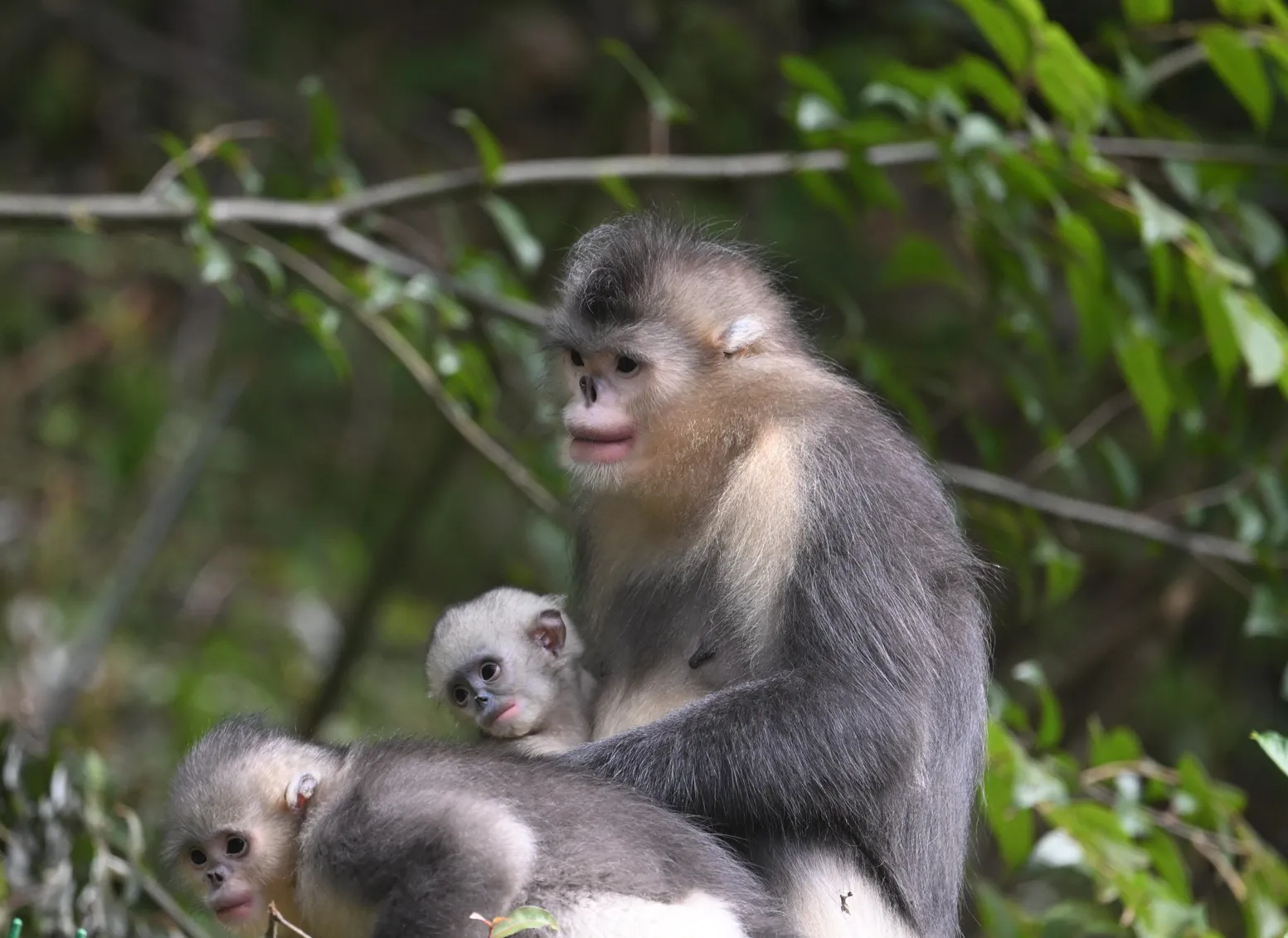
The social life of
the Yunnan snub-nosed Monkey

The Yunnan snub-nosed monkey is a species endemic to China
they live in the rugged mountains of Shangri-La
The Yunnan snub-nosed monkey is the only animal in the world with red lips, and is also the animal most similar to humans in terms of facial features, behaviour and family bonds. They are a species endemic to China, inhabiting the high-altitude forests of Yunnan and Tibet at elevations of over 3,000 metres, between the Lancang and Jinsha rivers.
Across China’s vast mountainous forests, stretching from snow-capped peaks to rainforests, dwells a rare primate—the golden snub-nosed monkey. They are a flagship species for global biodiversity conservation. The world’s extant golden monkeys include the Sichuan golden monkey, the Yunnan golden monkey, the Guizhou golden monkey, the Nujiang golden monkey and the Vietnamese golden monkey. Of these, the Sichuan, Yunnan and Guizhou golden monkeys are endemic to China, and their existence is nothing short of a miracle of natural evolution.
In the late 19th century, following his discovery of the Sichuan snub-nosed monkey, the French zoologist Miller Edwards identified a new specimen in Zizhong Village, Deqin County, Yunnan. They discovered that this specimen also possessed the distinctive upturned nose, but its fur was black and white, presenting a clear distinction from the Sichuan snub-nosed monkey. Consequently, they formally published their findings in 1897, establishing the Yunnan snub-nosed monkey as a new species within the genus Rhinopithecus. Interestingly, when the French zoologists first recorded the species, they faithfully noted the local name for the Yunnan snub-nosed monkey: ‘black-and-white monkey’. This simple name accurately describes their physical characteristics: a black back, crown and limbs, paired with a white belly, as if clad in an elegant black-and-white tuxedo. Today, we more commonly refer to them as the Yunnan snub-nosed monkey, or the black-and-white snub-nosed monkey.
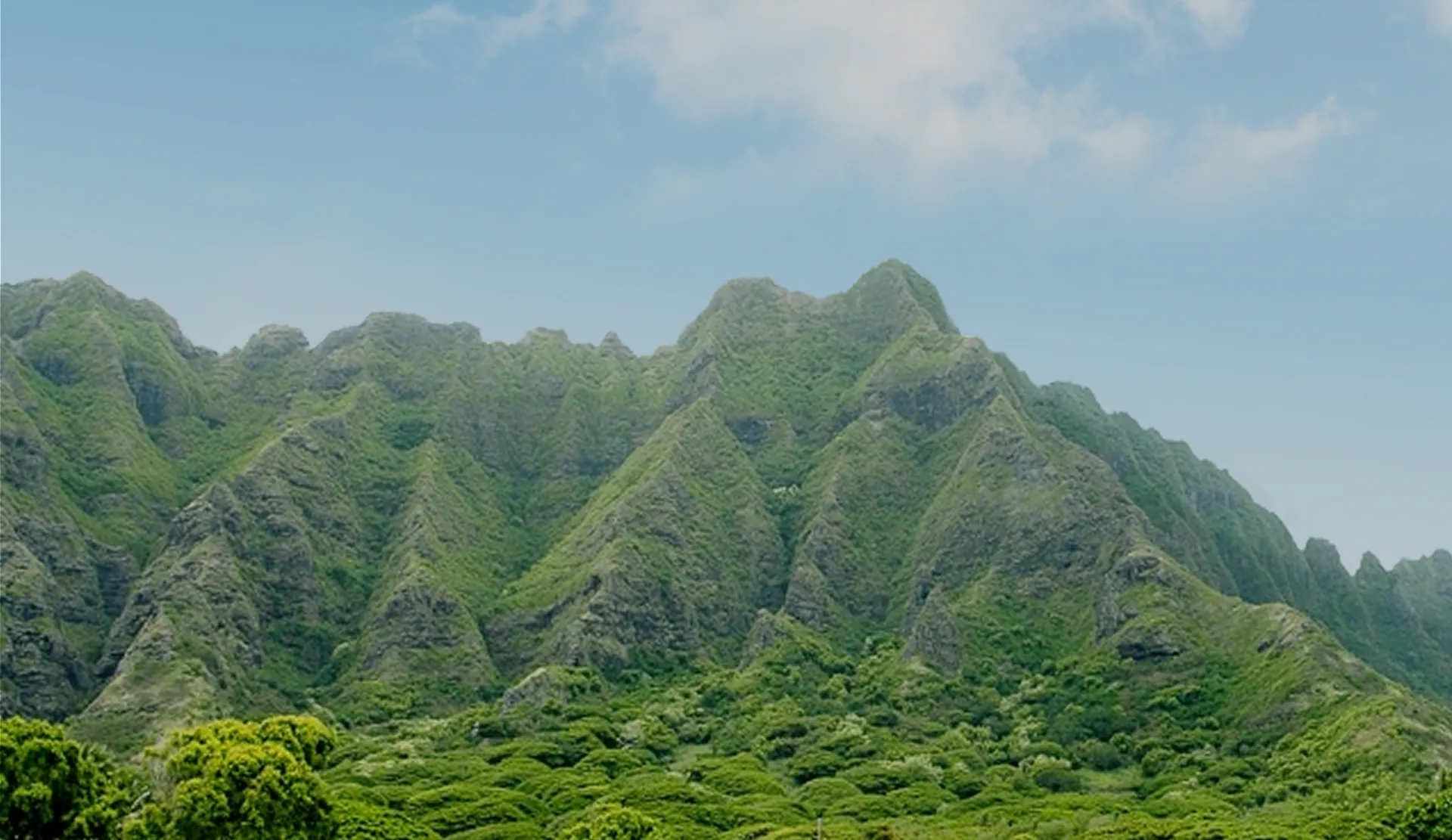
In the majestic, ancient glacial remnants of the Baima Snow Mountains—a narrow range stretching 160 kilometres from south to north, yet only 30–40 kilometres wide from east to west—lies the primary habitat of the Yunnan snub-nosed monkey. This area is home to 14 of the 24 known populations of the species, making it the reserve with the largest existing population of Yunnan snub-nosed monkeys.
For centuries, the Yunnan snub-nosed monkey has inhabited the rugged peaks of the Hengduan Mountains, earning the moniker ‘spirits of the snow-capped mountains’. As they dwell in remote, dense alpine forests and are highly sensitive to human activity, surveying these monkeys has always been an exceptionally arduous and challenging task. This is also why so little is known about them.
In the social structure of the Yunnan snub-nosed monkey, a troop consists of multiple families; they have no ‘monkey king’, but rather form a community organised around these family units.
Xingwang lives in the valley of the Bai Ma Snow Mountains in Shangri-La, as part of a troop comprising eight families. He is neither particularly imposing in stature nor does he possess a striking coat; he is simply an unremarkable male monkey, yet he possesses exceptional intelligence and speed. Challenges in the forest are a constant occurrence, and Xingwang has carved out a realm of his own through his exceptional ability to sprint and leap swiftly, launching surprise attacks on his opponents—he has defeated the dominant males of the other seven families within the troop, becoming the undisputed king of the entire troop. At its peak, his family numbered 15 members: five wives and nine offspring. Whenever Xingwang led his wives and children out to forage, the other Yunnan snub-tailed monkeys dared not approach to disturb them, and would even make way for him. Although male monkeys would always come to challenge him, Xingwang was invariably the victor.
Until one day, several years later, Xingwang’s family welcomed a new member. He led his family into the woods to forage as usual; the mother monkey cradled her infant, occasionally kissing and licking the little one with her mouth. Suddenly, a dark shadow appeared near Xingwang’s family, and Xingwang immediately went on the offensive—but this time, it was he who was defeated. The victor sat high up in a tree, looking down from above; it was a male monkey named ‘Big Guy’. Xingwang led his family away from the foraging ground, whilst Big Guy took over the area with his own family. Big Guy had come from another valley; upon arriving at Xianggu Qing, he had previously defeated the dominant male of another family and taken over that group. As an outsider, he had always sought to establish his status within the troop; although he had never clashed with Xingwang before, this time, he had won.
This marked a change of leadership. It was only when we saw Xingwang’s wrinkled face, covered in scars, that we realised: the former king had indeed grown old.
In the years that followed, Xingwang’s condition steadily declined. Three years later, during a fight, he fell to the ground and sustained serious injuries. From then on, his family fell apart: the female monkeys left him—for he was no longer able to protect the group; his sons, too, joined the bachelor group. Soon after, the former king, Xingwang, passed away in solitude.
From the society of the Yunnan snub-nosed monkeys, we have witnessed the path to becoming a king: once glorious beyond measure, yet always fraught with danger. Perhaps this is simply the law of nature.
The story of the Yunnan snub-nosed monkeys on the Snow Mountains of Bai Ma continues. In this valley of Shangri-La, little known to the outside world, these snow-capped mountain spirits are playing out their own unique tale.
Start customizing your exclusive !

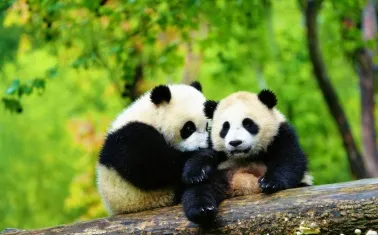
We will take you on an in-depth adventure through the Giant Panda National Park, where you will learn about the wild lives of giant pandas and Sichuan snub-nosed monkeys in their natural habitats, and discover wildlife unique to China. You will also have the opportunity to get involved in giant panda conservation efforts by becoming a giant panda volunteer.Here, you can not only appreciate the beautiful and rich natural environment of China but also deeply experience Chinese culture
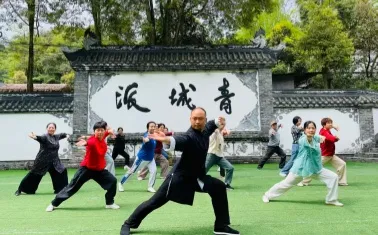
You will have an incredible journey, experiencing the work of a panda keeper, visiting the ancient town to learn from a kung fu master as your teacher, and joining the ranks of heroes.
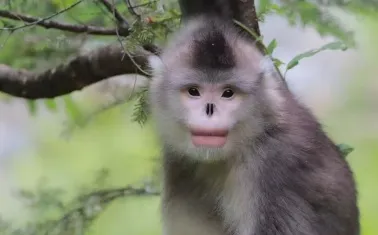
The Shangri-La region is not only a rich species gene bank but also one of the best-preserved biodiversity hotspots in China. Numerous rare and unique species thrive here, including the Yunnan Snub-nosed Monkey, Stryker's Snub-nosed Monkey, Skywalker Hoolock Gibbon, Sclater's Monal, Slender-billed Scimitar Babbler, and Fire-tailed Myzornis. Moreover, this is also one of the most culturally diverse regions in China.
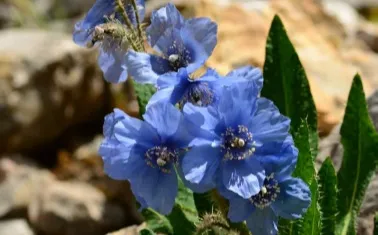
The Shangri-La region is a uniquely distinctive geographical area, home to hundreds of snow-capped peaks, deeply incised gorges, vast alpine pastures, scattered mountain lakes and vast primeval forests... It serves as a microcosm of the Northern Hemisphere’s biodiversity and ecological environment, and is truly a mecca for flower enthusiasts from around the world. It is also a place of great cultural charm, offering visitors the opportunity to experience China’s diverse ethnic cultures.


+86-28-62058618

info@bestecotours.com

No. 889, Section 1, Riyue Avenue,
Qingyang District, Chengdu City,
Sichuan Province

Copyright © 2026 •BESTECOTOURS
| Open Positions | Privacy Policy | Terms and Conditions | Manage Cookies